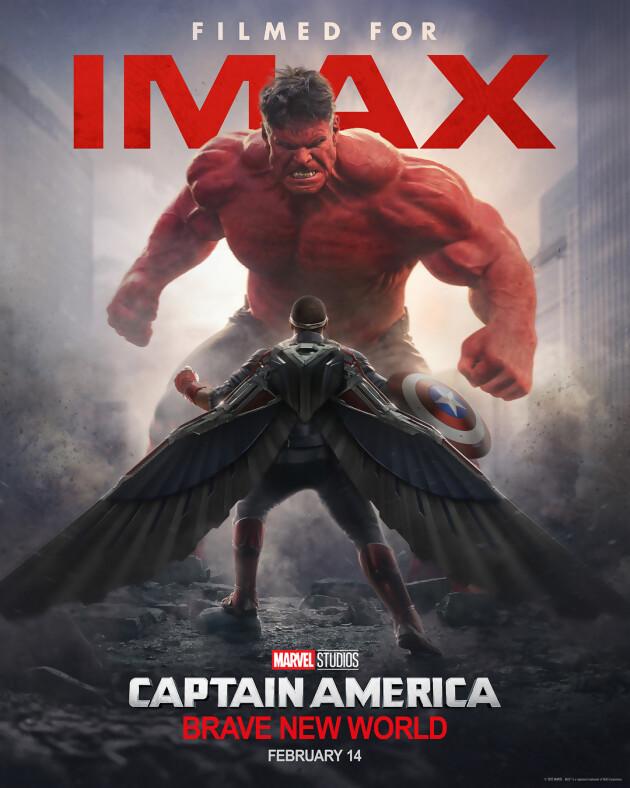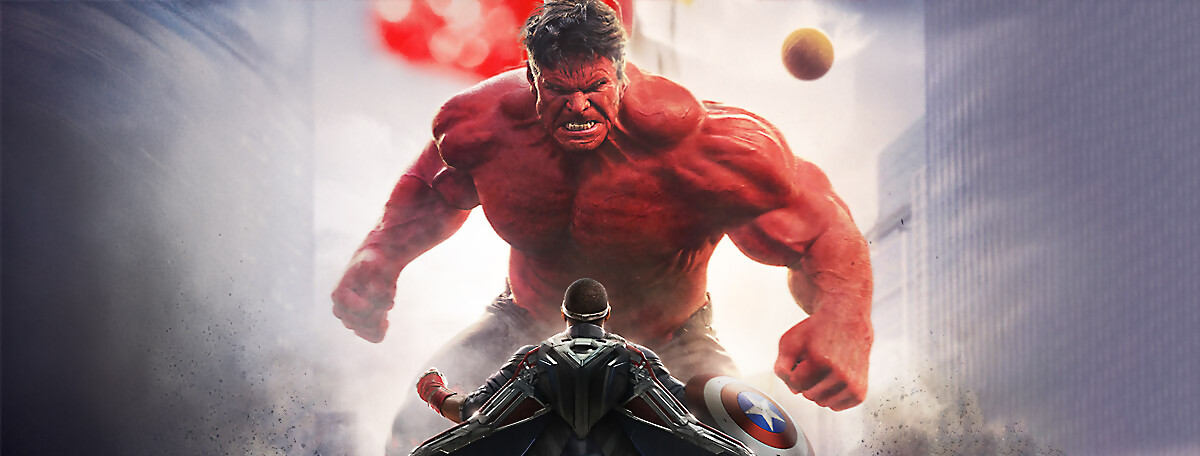
As you may already be aware, the Marvel Cinematic Universe is currently navigating through a challenging phase. Following the conclusion of the Thanos saga, the departure of its key stars, and the advent of Disney+, which necessitated a high-volume production of films and series by Kevin Feige and his team, there has been quite a disruption in the otherwise smooth-running machine that was once the MCU. Interest has dwindled, box office performances have faltered, and even the most devoted fans have seemingly ghosted some series. Yet, not too long ago, merely five to six years back, Marvel Studios seemed invincible, generating billions in box office revenue and arousing the envy of even the most prestigious filmmakers, some of whom disparaged the success mainly to assert themselves. That was the pinnacle of the MCU, a time when Kevin Feige was seemingly invincible. However, that was before the onset of superhero fatigue, questionable decisions, and Disney’s shift in focus from cinema to streaming platforms for profitability. Despite these challenges, there have been bright spots and surprises, including releases like Shang-Chi, Doctor Strange in the Multiverse of Madness, Guardians of the Galaxy Vol. 3, and most recently, Deadpool & Wolverine. Yet, these have not been enough to reignite the fervor and set forth a promising new narrative arc. However, Captain America 4 signifies the conclusion of Phase 5 and aims to lay a solid foundation for Phase 6, marked by the introduction of the Fantastic Four with new stakes on the horizon. But should one rush to the theatres unreservedly? Let’s explore this together…
Captain America Brave New World is a complex endeavor with numerous objectives to fulfill, making it nearly an insurmountable task to achieve within a two-hour runtime. Nonetheless, upon exiting the screening, there is an overall positive impression left, suggesting that the MCU is finding its footing again and, importantly, it hasn’t failed to meet expectations like Ant-Man 3, Thor: Love & Thunder, and The Marvels did. While the film may not fully achieve all its intended goals, there is an unmistakable effort to entertain and please audiences, a factor worth noting.
The initial take-away from the film is its attempt to reconnect with positive aspects from previous movies, notable in its geopolitical angle reminiscent of Captain America: The Winter Soldier from 2014, widely regarded as one of the MCU’s finest films. This approach is fitting for a superhero like Captain America, who veers from the traditional superhero archetype. Sam Wilson is not Steve Rogers, a point emphasized in the film due to his refusal to take the Super Soldier serum. As a result, he relies purely on his athletic skills and available tools. This theme was present in 2021’s series Falcon and the Winter Soldier and persists in Brave New World, although the threat level has significantly escalated. While facing the Flag-Smashers in the series was manageable, confronting Red Hulk is an entirely different challenge. This could stir some debate concerning how an average individual like Sam Wilson can confront a formidable opponent like General Ross as Red Hulk. No spoilers here, but it’s anticipated that this topic might spark heated discussions on social media.
CAPTAIN AMERICA AND HIS CHALLENGES
Red Hulk isn’t the only adversary for the airborne Captain America. Two more antagonists emerge: Sidewinder, the head of the Serpent Society, portrayed by Giancarlo Esposito, and Samuel Sterns, better known as The Leader, who makes a return to the MCU after a 15-year hiatus. The character was the secondary villain in Louis Leterrier’s The Incredible Hulk, a time when the MCU was still in its nascency, yet Tim Blake Nelson has agreed to reprise his role. It’s recommended to revisit Louis Leterrier’s film, as Captain America 4 serves as a sort of continuation of his Hulk movie, or at least incorporates it into the official MCU, offering a few surprises, but no spoilers here.

The main issue with Captain America 4 is indeed the multiplication of threats and villains, creating a challenge in giving each of them the attention they deserve. It’s unfortunate because there is potential in Sidewinder, portrayed convincingly by Giancarlo Esposito. However, one might argue he often falls into his familiar villainous roles similar to Gus Fring from Breaking Bad. On the contrary, Tim Blake Nelson appears somewhat sidelined, largely due to the writing of his character, who spends much of his time concealed before magically appearing in different locations as the antagonist. This aspect holds it back. Meanwhile, Harrison Ford as General Ross and Red Hulk is a standout. His commitment to the character is evident on screen and refreshing to watch. He hasn’t merely gone through the motions for a paycheck; rather, he’s embraced the role with enthusiasm. Although he is the main adversary, Marvel possibly could have extended his storyline, particularly in the final battle scene, which, although satisfying, feels all too brief.
A PULSING RED
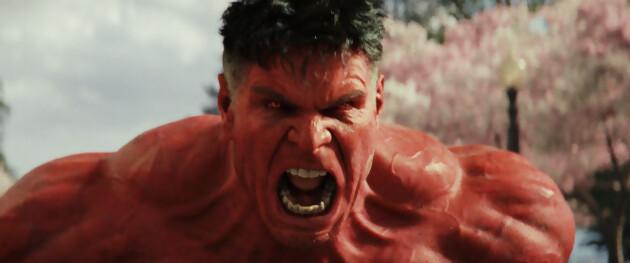
There is a logical reason for why the showdown between Captain America and Red Hulk is shortened—scenes featuring Hulk are expensive to produce. Those scenes, however, are executed well, bringing back the power of Hulk that has been missing from the MCU, especially after the introduction of Smart Hulk, which seriously toned down his power. Red Hulk, in contrast, lays waste to everything in his path, a refreshing change, especially given the efforts invested in the impressive CGI of Harrison Ford as Red Hulk. The character’s rendering is exceptional, with Marvel showcasing him in close-up shots without hesitation. However, the backdrop for these scenes leaves much to be desired, particularly the cherry blossom battle locale, which already looked unimpressive in trailers and remains unpleasant in the final film. The disparity between the well-crafted Red Hulk and the poor quality of the surroundings is baffling.
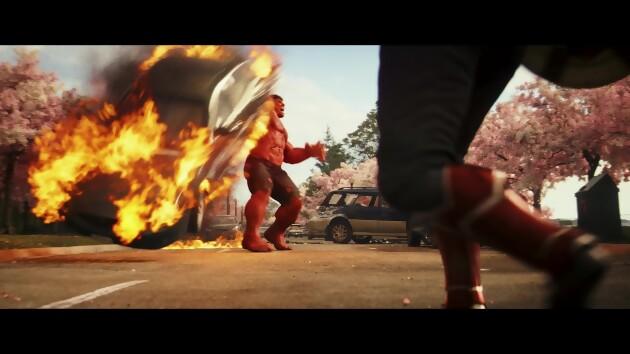
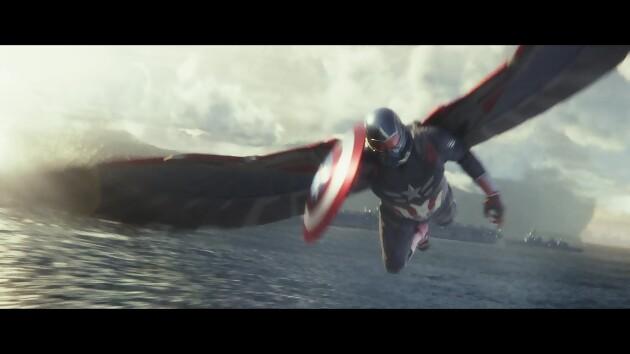
Aside from this significant drawback, Captain America 4 delivers satisfactory action sequences. The aerial combat scenes, featuring fighter jets and the reappearance of a Titan in the Indian Ocean unseen since The Eternals, are noteworthy. Marvel Studios has finally found a place for this element in the MCU, using it to introduce adamantium—an even more formidable material than vibranium—smoothly setting the stage for the introduction of the X-Men, including Wolverine. It’s important to note that a new actor will take over the role of Wolverine since Hugh Jackman won’t be reprising it for the next decade. His recent appearance alongside Deadpool was more of a cameo, meant for fun, to appease Ryan Reynolds. The true new Logan of the MCU, who eventually aligns with the Avengers, will not be Hugh Jackman. Returning to the thrilling fighter jet sequence, there is a nod to Top Gun Maverick, with a clear homage to Tom Cruise’s film, while presenting Captain and the new Falcon as fighter jets themselves, injecting a fresh dynamic. It’s very cool.
FEELING THE HEAT
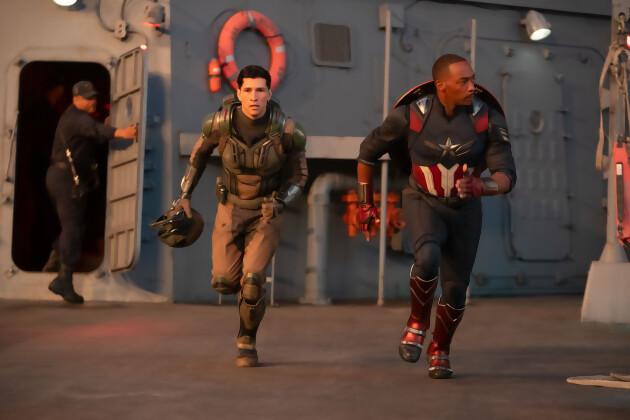
Anthony Mackie rises to the occasion in his new role as Captain America, overcoming skepticism. Personally, I’ve always considered him an actor of secondary distinction, not one whose name alone lures audiences to theaters. Yet, there is undeniable sincerity in his performance. Furthermore, parallels are drawn between his character’s arc and his real-life transition from Chris Evans’ portrayal to assuming the mantle of Captain America. This mirrors his real-life journey, experiencing the pressure of succeeding a prominent role from the sidelines lacking in stature or charisma, a notion often addressed in the film. Ultimately, he performs commendably, as does Danny Ramirez’s Joaquin Torres, the new Falcon, who emerges as an engaging sidekick. The chemistry between both characters and actors is palpable on screen. What stands out in Captain America 4 is the genuine effort to recapture the magic of past MCU successes and the determination to do justice with the resources available—a Sam Wilson less explosive than a super-powered Steve Rogers, yet undeniably entertaining. Although there are areas of improvement, the film merits recognition for maintaining good pacing during its two-hour runtime and treating audiences respectfully, unlike previous ventures like Ant-Man 3, Thor: Love & Thunder, and The Marvels. Let’s move on from these missteps because with the Fantastic Four, Galactus, and the X-Men in the pipeline, the MCU still holds exciting stories to tell. I’m optimistic!
OUR RATING: 6/10