Welcome to the 82nd installment of our Ready or Not Development Briefing dated January 31st, 2025.
Welcome to the inaugural developer briefing of the new year! Today, we are excited to spotlight our fresh NPC AI sentiment survey, delve into our refined approach to optimization, and provide an in-depth examination of our process for creating RoN levels, with insights drawn from the Home Invasion DLC.
After returning from our winter hiatus about a month ago, we have been regrouping and redoubling our development efforts on Ready or Not. At present, we are nearing the conclusion of a whirlwind of meticulous planning and prototyping.
Our detailed look into the level design process during this briefing will offer context to the intricate work involved in each Ready or Not content release. Coincidently, this aligns with the imminent conclusion of our community mapping contest (consult our official Discord for more details)!
In relation to that, many members of our community will be pleased to learn that some of the upcoming levels we have in the works, which remain undisclosed, are on a smaller scale. This adjustment will offer a contrast to the expansive scope of some of our more recent levels (for instance, the large maps like Leviathan and 3 Letter Triad).
Please note: These development briefings aim to keep you informed about certain elements of our ongoing support for Ready or Not, but they do not encompass all of our current projects. Be mindful that the content outlined in our development briefings may still be in development and subject to modifications.
As you may have noticed, we launched a survey yesterday concerning NPC AI sentiment! You can participate here:
We are delighted by the tremendous response we’ve received thus far, and we invite your feedback—every contribution is valuable and aids in understanding your experiences!
If you find yourself unsure about a particular question, it’s likely non-mandatory and can be skipped! Should you unintentionally complete a required question without a suitable response, please elaborate in the written section where you can.
One of our continuous objectives is the enhancement of SWAT AI, Suspect AI, and Civilian AI. The survey will enable us to gather tangible data regarding the current AI functionality following Dark Waters’ release, which included numerous bug fixes and improvements. We seek to assess their impact and verify for any unintentional issues.
The focus of this survey is to analyze specific AI functions that influence how players perceive difficulty, and how AI behaviors contribute to frustration or satisfaction. While feedback from social platforms and channels (like those on our official Discord) are useful, this allows us to target specific AI areas and consolidate the information.
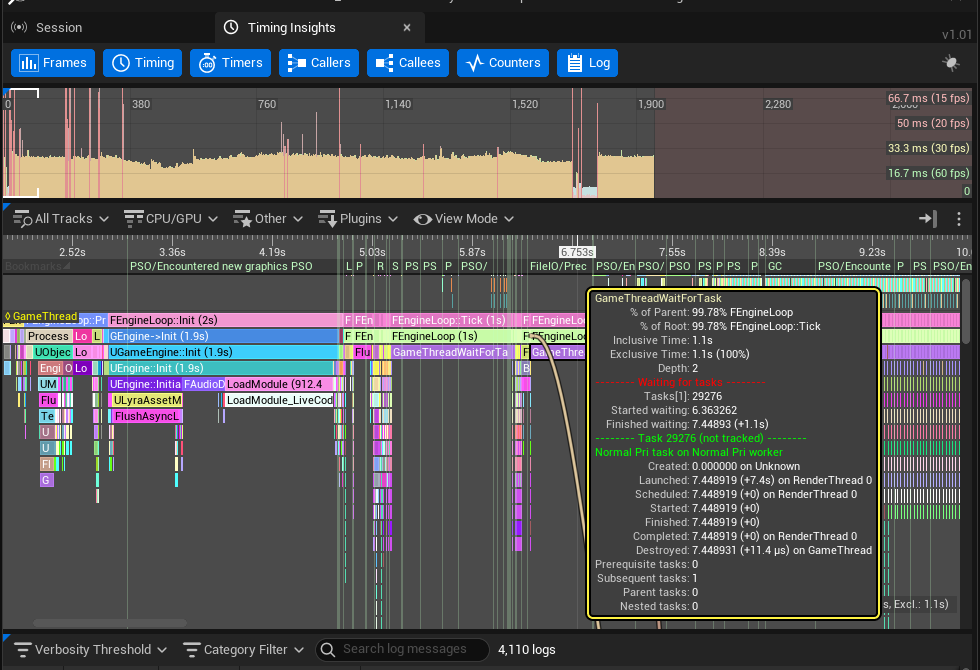
We have now fully integrated the “Unreal Insights” system into our ongoing optimization efforts to ensure smooth game performance. This system measures performance metrics during specific events and processes, enabling us to pinpoint issues more effectively.
We have already observed early performance enhancements from incorporating this tool into our workflow, and as our technical artists and engineers further implement it, we anticipate even greater benefits.
[Image below: General example of the Unreal Insights task graph analysis viewport from the UE5 Developer Page]
Our talented level design team members, notably Tisa, documented their journey in crafting levels for Ready or Not, with a specific focus on DLC 1.
The outcome is a piece that shares our philosophies and methodologies in creating levels for Ready or Not—in general terms—employing new behind-the-scenes photographs from Narcos development throughout the stage breakdown, and at the end featuring a complete example of Lawmaker from DLC 1:
Creating a level in Ready or Not is a multi-phase process, from ideation to final touch-ups.
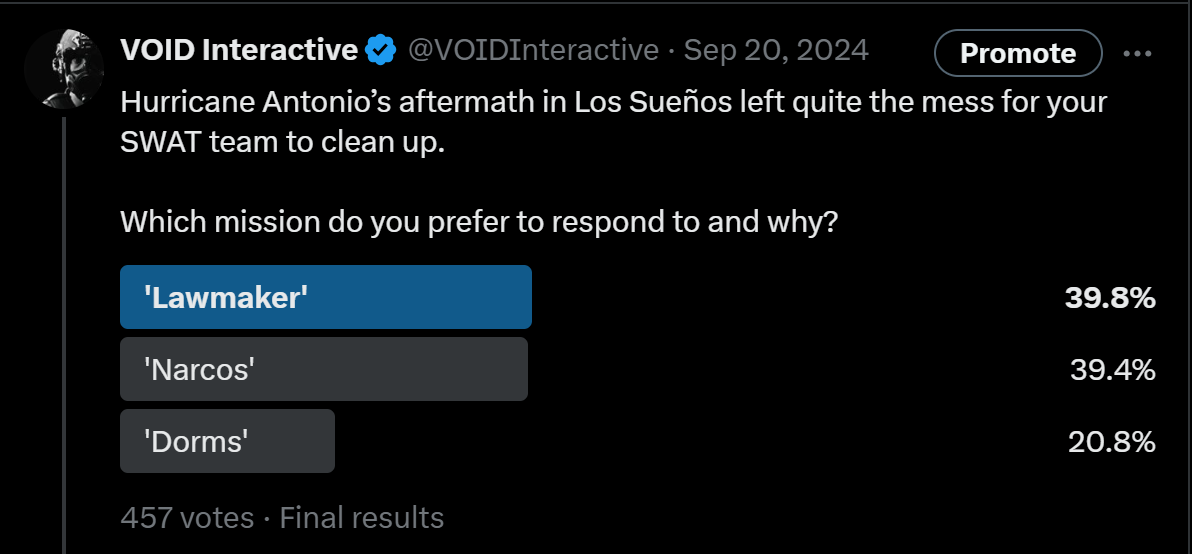
[Image below: Influences for the levels Narcos and Lawmaker are drawn from feedback given in our Home Invasion map poll]
Stage 1 (Planning)
Production kicks off with selecting which level to create. At VOID, every team member is encouraged to propose an engaging level idea, drawing inspiration from community feedback.
These ideas are penned down as game design documents (GDDs) which are added to a collection; then based on the target DLC theme and its fun and innovative aspects, an idea is chosen for development.
Our narrative designers and concept artists then start brainstorming various ideas, and the lead level designer develops a design brief for level designers to start prototyping.
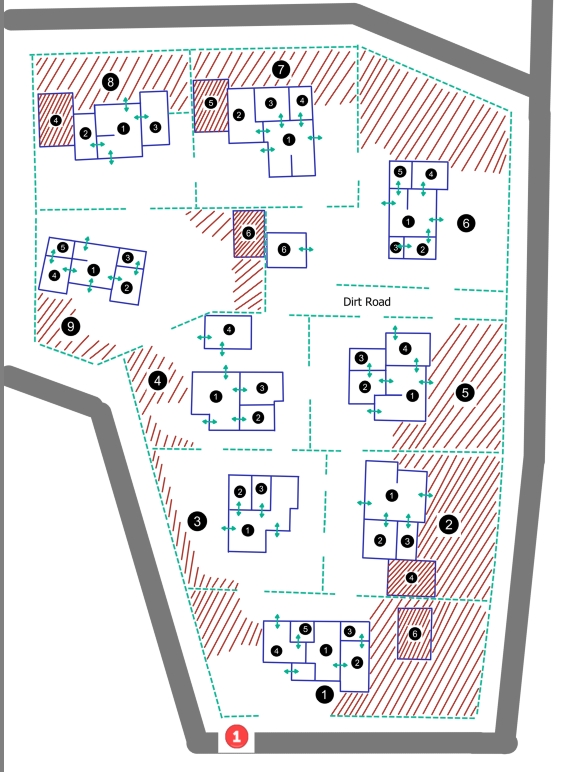
[Image below: Sketch of Narcos layout, highlighting doorways and essential elements]
Stage 2 (Prototype)
The level design process enters its initial ‘prototype pass,’ creating various versions rapidly to explore enjoyable features and shaping the alpha version. Ready or Not, noted for its realism and serious themes, grounds its levels in real-world references.
This involves in-depth research, visiting real-life locations when possible, and ensuring architectural coherence for target areas. Prototypes serve as artist sketches—for trial and error purposes; designs may be discarded if they don’t meet desired quality standards.
[Image below: GPS-style layout of Narcos based on design research of similar neighborhoods]
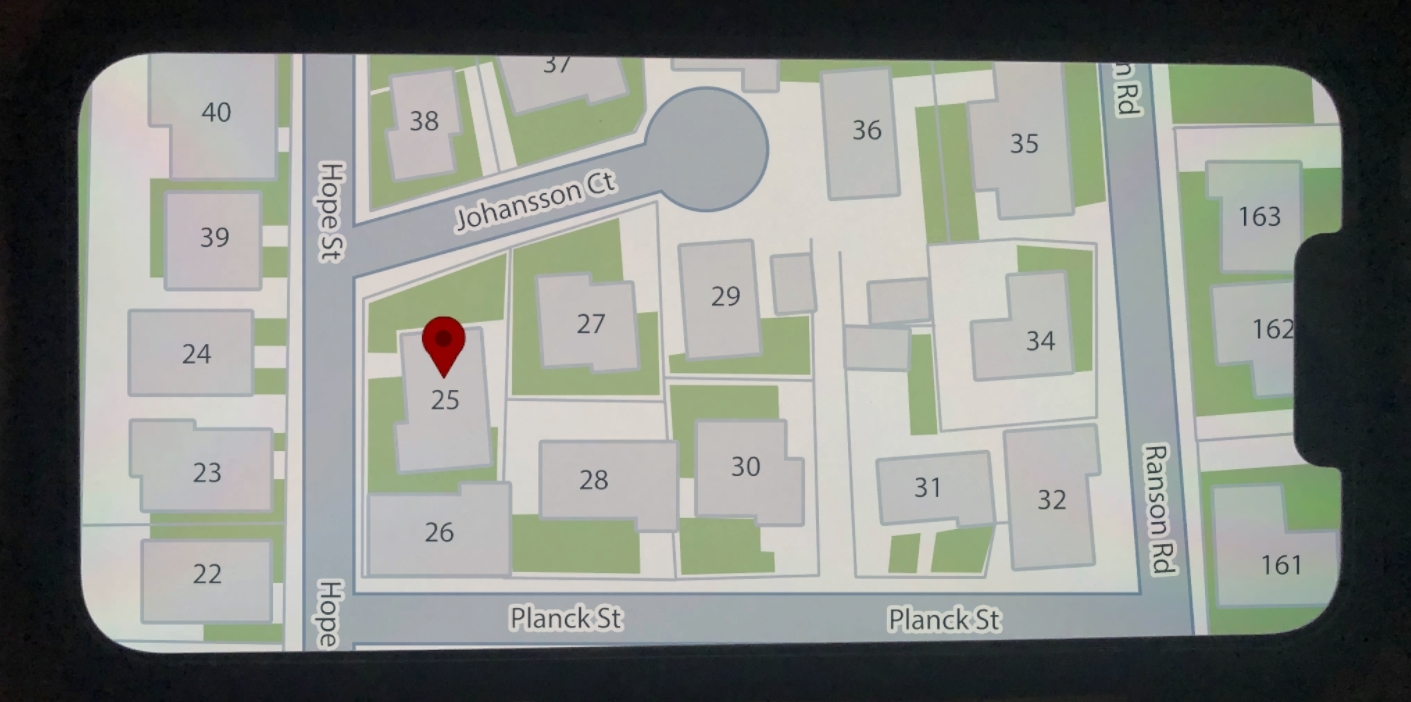
Upon each level designer completing their creation, it is submitted for the lead level designer’s review. Together, they decide on the most suitable prototype for the Alpha stage.
Commonly, standout elements from different prototypes are combined to form the final Alpha, encapsulating the best features of all initial versions.
Stage 3 (Alpha)
Once the premier prototype is acknowledged, we elaborate on our blockouts, integrating elements such as navigation, doors, AI, and cover for gameplay viability. At this juncture, our combat designer fine-tunes AI for optimal combat behavior, and internal QA begins identifying major issues.
[Image below: Blockout version of Narcos]
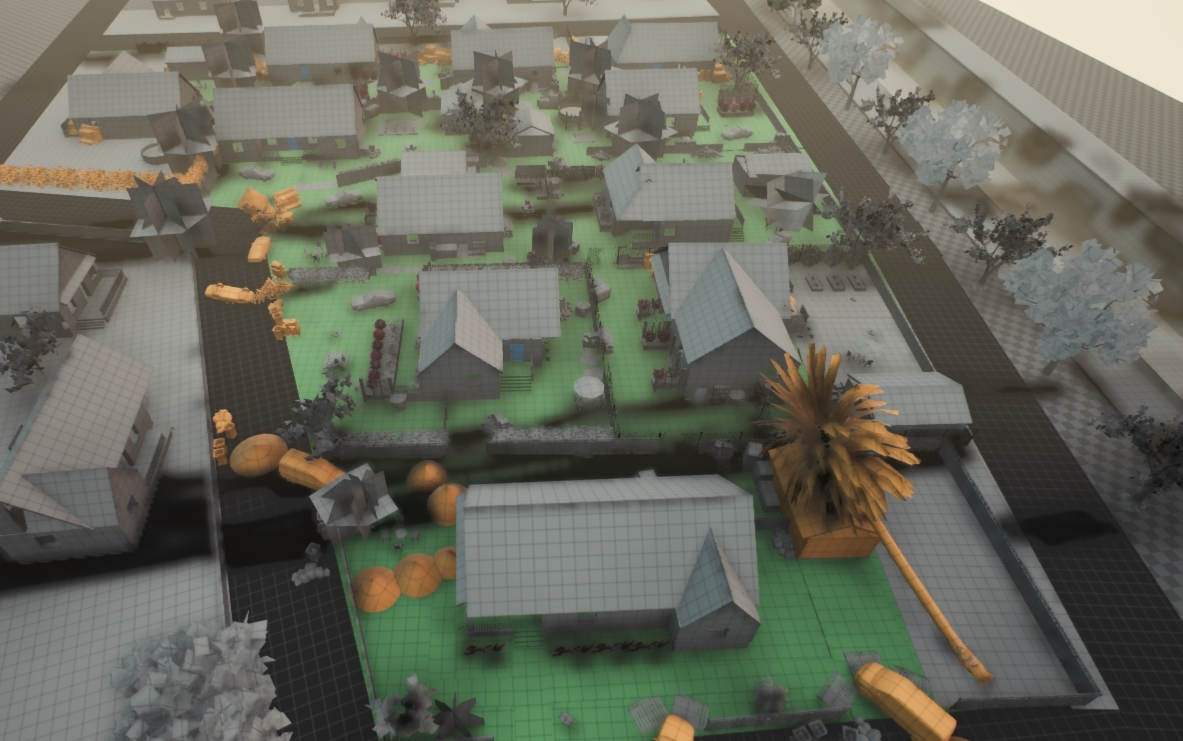
With a robust Alpha candidate present, level designers draft a level handover document containing vital information, images, references, and the rationale for individual components. It is then handed over to the designated environment artist. Concurrently, other team units—including audio, character art, etc.—begin work on corresponding elements like voice lines, character designs, etc.
The level designer maintains close collaboration with these teams to ensure the design’s intent remains intact amidst cross-departmental coordination.
Stage 4 (Beta)
Post-environment pass, level designers return for several refinement stages.
- Collision pass – Blocking volumes are added throughout the level to prevent players or AI from accessing non-playable areas, optimizing movement.
- Visibility pass – Visibility blockers are added to prevent unjust player-AI interactions through geometry cracks.
- Navigation pass – Navigation areas are refined, ensuring no navigation in non-playable zones, critical for optimization and AI bug prevention.
- Door pass – Ensuring all door functionalities operate correctly for both player and SWAT AI.
- Cover pass – Ensuring AI cover points are accurately positioned.
- Interactable pass – Validating and implementing custom logic functions correctly.
[Image below: Interaction-related blockout on Narcos]
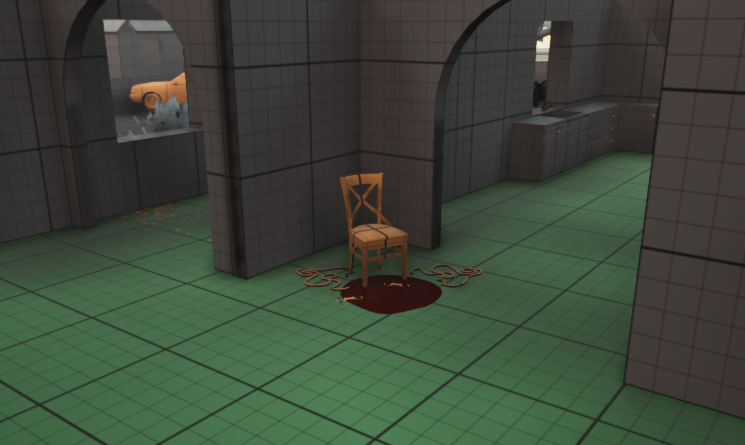
[Image below: Narcos red blockout triangles indicate sightlines among doorways, aiming to balance player visibility and exposure to danger]
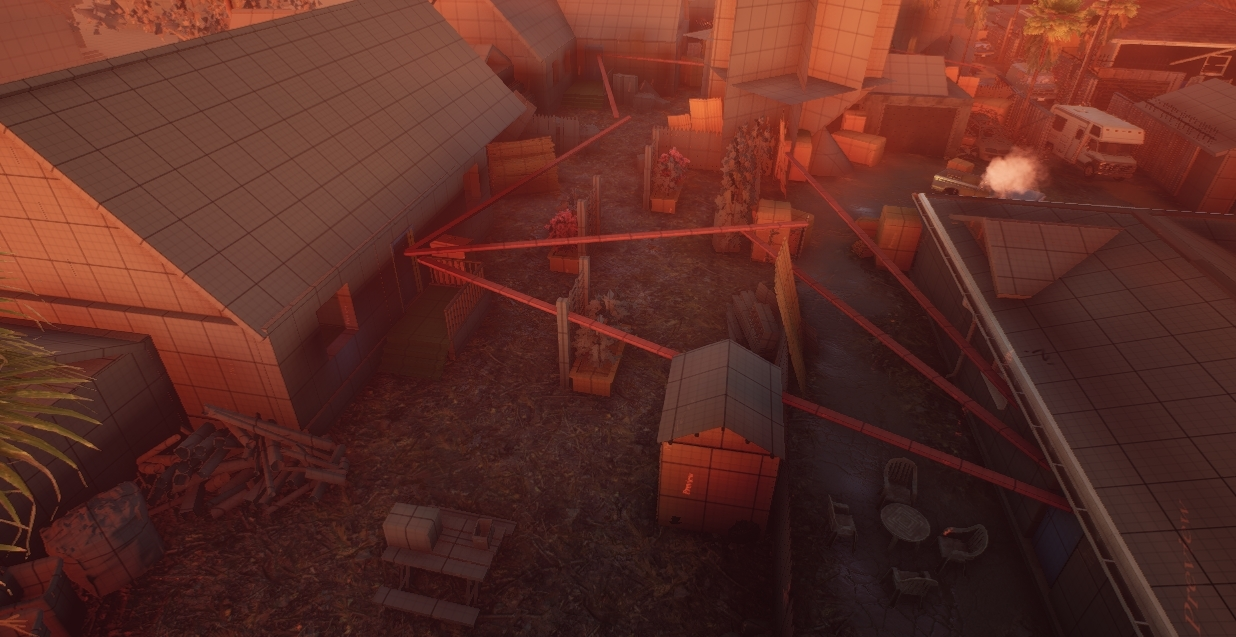
Stage 5 (Content Complete)
At this juncture, the level designer collaborates with all teams to verify that all level features are implemented and functional. Rigorous QA testing occurs to ensure readiness for public release.
Lawmaker Layout
For Lawmaker, our creative vision was a mansion featuring expansive rooms and wide corridors.
Unlike standard homes, mansions often have intricate layouts and peculiar angles, a feature we found uniquely engaging and something relatively new in Ready or Not.
Despite such unique angles and layouts, mansions generally adhere to architectural norms, often having clear top-down plans.
The simplified plan for Lawmaker comprises two rectangles intersecting a third at a 45-degree angle, providing aesthetically pleasing 45-degree angles for distinctive room and corridor characteristics, enhancing the satisfaction in room clearing.
[Image below: Basic layout concept draft of Lawmaker]
To facilitate easier room clearing, we designed larger-than-usual RoN rooms, maximizing space affordances.
- The increased width allows enhanced player and AI movement, avoiding congestion in smaller passages.
- Although the mansion appears imposing, the room count matches our typical maps, maintaining the Ready or Not formula and negating excessive doorway breaches.
- Ultimately, larger rooms promote realism and present a distinct challenge appreciated by our players.
[Image below: Lawmaker room sectioning]
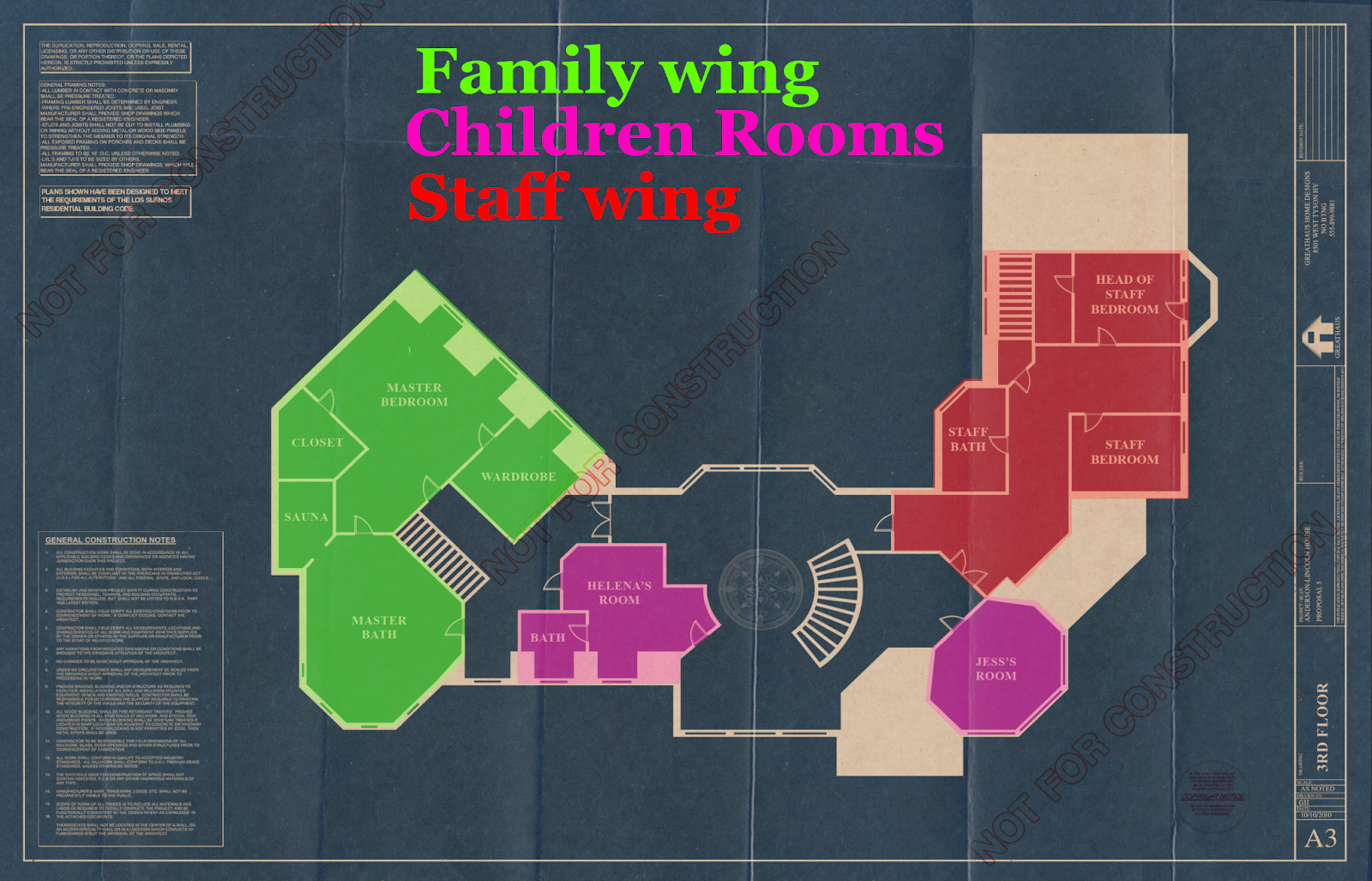
Lawmaker Gameplay:
When conceptualizing gameplay for this space, our goal was a home invasion\hostage scenario with AI systems that reflect this context.
The invaders, a group of eco-terrorists, are not exceptionally trained, aside from two key figures, and their surprise at penetrating the home is evident. Thus, behaviors such as hesitance, cowardice, and flight were incorporated.
How did we intend to elevate their threat level and make them more challenging?
Aside from frequent hostage-taking—doubleshooting vigilance near civilians—we applied a zone system across multiple floors.
This system promotes suspect gunfire upon sighting players, with options to flank or retreat to surprise players anew.
In Lawmaker, suspects fleeing upwards form clusters on higher floors, posing intensified threats should players fail to apprehend them individually below.
In real scenarios, suspects congregate civilians for hostage-taking in singular rooms.
We’ve introduced this mechanic, emphasizing careful shot placement in mixed suspect-civilian areas.
Bringing it back to the layout:
[Image below: Zone layout for Lawmaker]
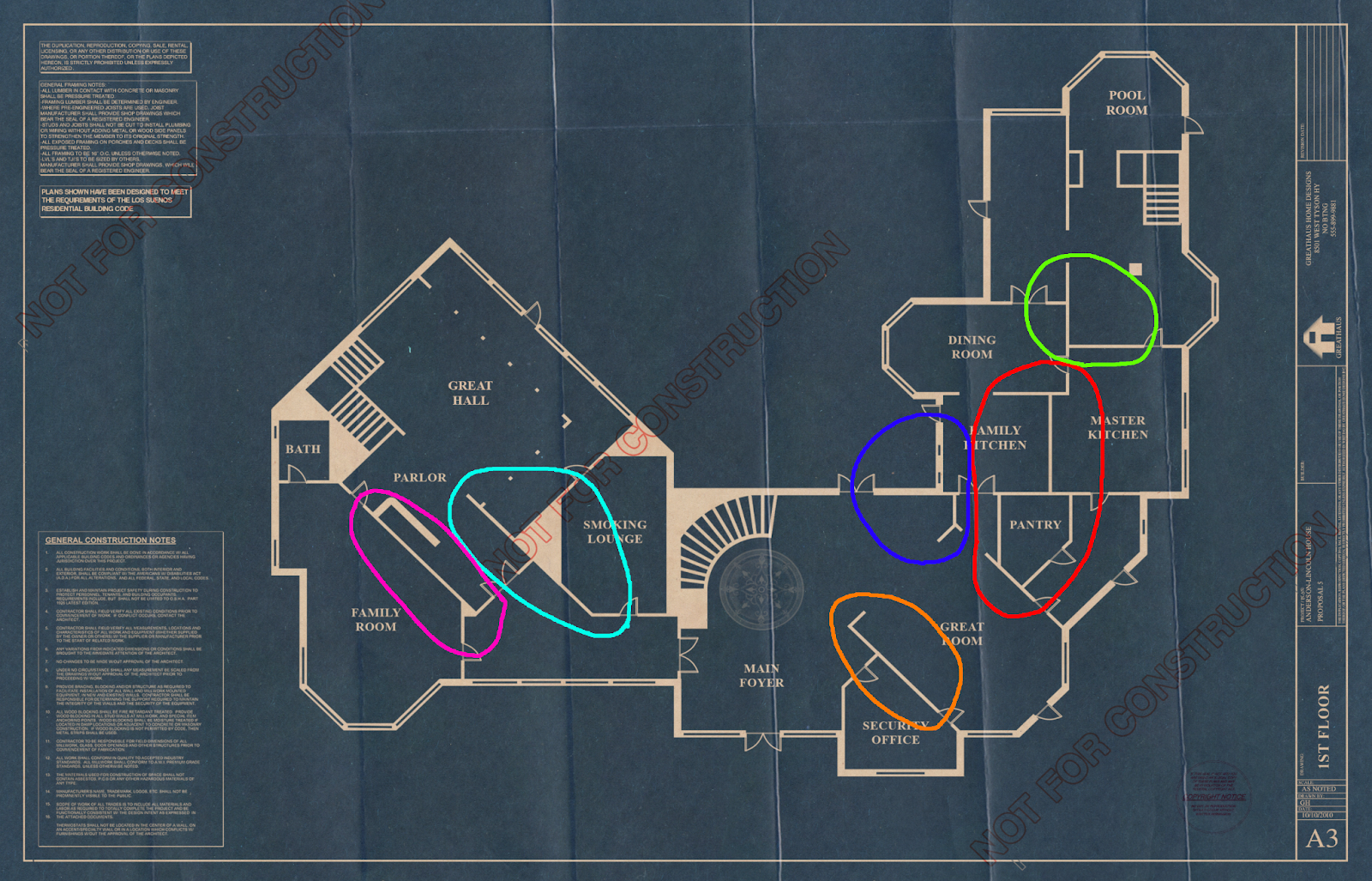
To bolster AI flanking and retreat dynamics focused indoors, we incorporated ample loops in the mansion structure. This provides strategic value for players securing rear exits or observing their backs.
Given Lawmaker’s three-story design, we ensured each wing and the center possess staircases uniting all floors, facilitating AI zone transfers.
Such considerations enhance replayability, allowing players to explore varied routes, adjusted to each situation. Moreover, three unique player start points exist, each presenting distinct challenges.
- The main entrance offers a safer approach and drops players centrally but requires tactical decisions on direction.
- The side entrance allows central entry or west wing infiltration but exposes players to west wing windows.
- The back entrance grants diverse access options but leaves players vulnerable to numerous windows.
Narrative and Interactables
Fulfilling Lawmaker’s story entails objectives and interactables narrating and connecting its plot points.
Once eco-terrorists infiltrated the mansion owned by Sven Anderson Lincoln, an oil magnate, they vandalized the premises, splattering oil and paint over valuable items, damaging sculptures, and subduing household staff, taking them hostage. The family, barring Sven, escaped to a panic room.
Accordingly, locating the family forms a principal objective. Implementing it required addressing challenges:
- Ensuring children avoid any gameplay damage.
- Set random panic room locations for variability.
- Limited SWAT voiceline options informed solution constraints.
- The panic room’s presence must be conspicuous upon discovery.
We placed family members in a protective panic room, ensuring they remain secured during missions.
A live camera feed displaying alternative cameras, partially vandalized, highlights the panic room’s live feed status within a security room.
To engage players with the security desk and interactive elements, red alert lights guide interaction, resolving visibility issues.
By randomizing two possible panic room setups, location visibility was managed via connected security room elements.
Discussion was allocated to the mother’s character once interactions occur at the panic room, circumventing dialogue limitations. Additionally, external red lights indicate active panic rooms, visible even from hallways, preventing undue frustration.
Locating Sven, as an additional objective, draws on similar logic where five potential starting points are set for each mission. Sven’s own evasive movement during missions guarantees dynamic searching each time.
Please be sure to fill out the survey as possible, aiding future AI considerations! Finally, a reflective note on our level creation journey:
Every map we generate aims to introduce fresh and intriguing elements, be it through layouts, atmospheres, gameplay dynamics, challenges, etc. At VOID, level creation is driven by passion and dedication, and witnessing how players navigate new challenges is truly gratifying.
Rest assured, despite QA team testing, we welcome player feedback during gameplay. Any concerns about certain elements are promptly addressed in updates to ensure a one-of-a-kind experience for our players.
This concludes our 82nd development briefing. Thank you for joining us, and tune in next time for more development insights!

Follow Ready or Not on Steam.
Our other links: , , , , , .
VOID Interactive
