Introducing an innovative experimental column. While contemplating the concept of supplementing and enriching the five core categories on a somewhat regular basis— “New Perspectives on Classic Games,” “Delving into the Backlog,” “Doom,” “Back to the Past” (Interviews), and “Cinematographic Scribblings”—which often require significant preparation time, including interviews and other content, a new idea emerged that is both resonant yet fundamentally distinct. The outcome is the inaugural material for a series that will eventually be structured according to four key principles:
1. Although this sixth series is intended to become a more permanent fixture, there will be no content overload—there is no strict schedule for the release of new materials or fixed publication dates.
2. Similar to the interview format, this series adopts a structure of thirty entries, divided into three blocks, where facts replace questions.
3. Each material will explore historical events that occurred on a randomly selected day between January 1, 1970, and {current date} minus 20 years. Presently, on March 8, 2025, this sets the range to March 8, 2005.
4. Since the exact chronology of events, especially from older dates, can be somewhat vague, a broader range of interpretation is permitted for a number of facts.
This marks the conclusion of our introduction synopsis. Let’s proceed to the facts.
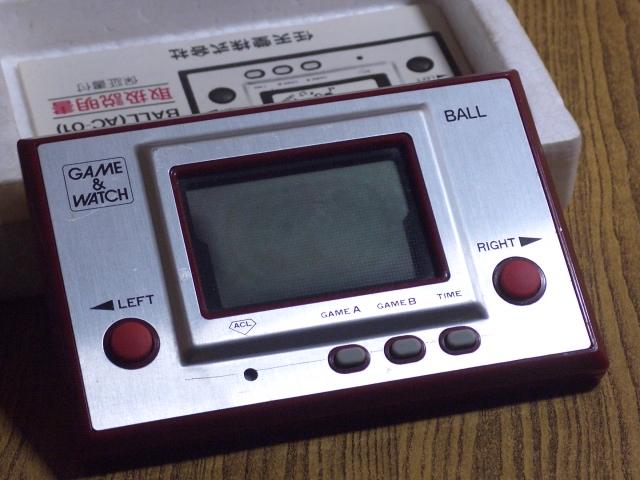
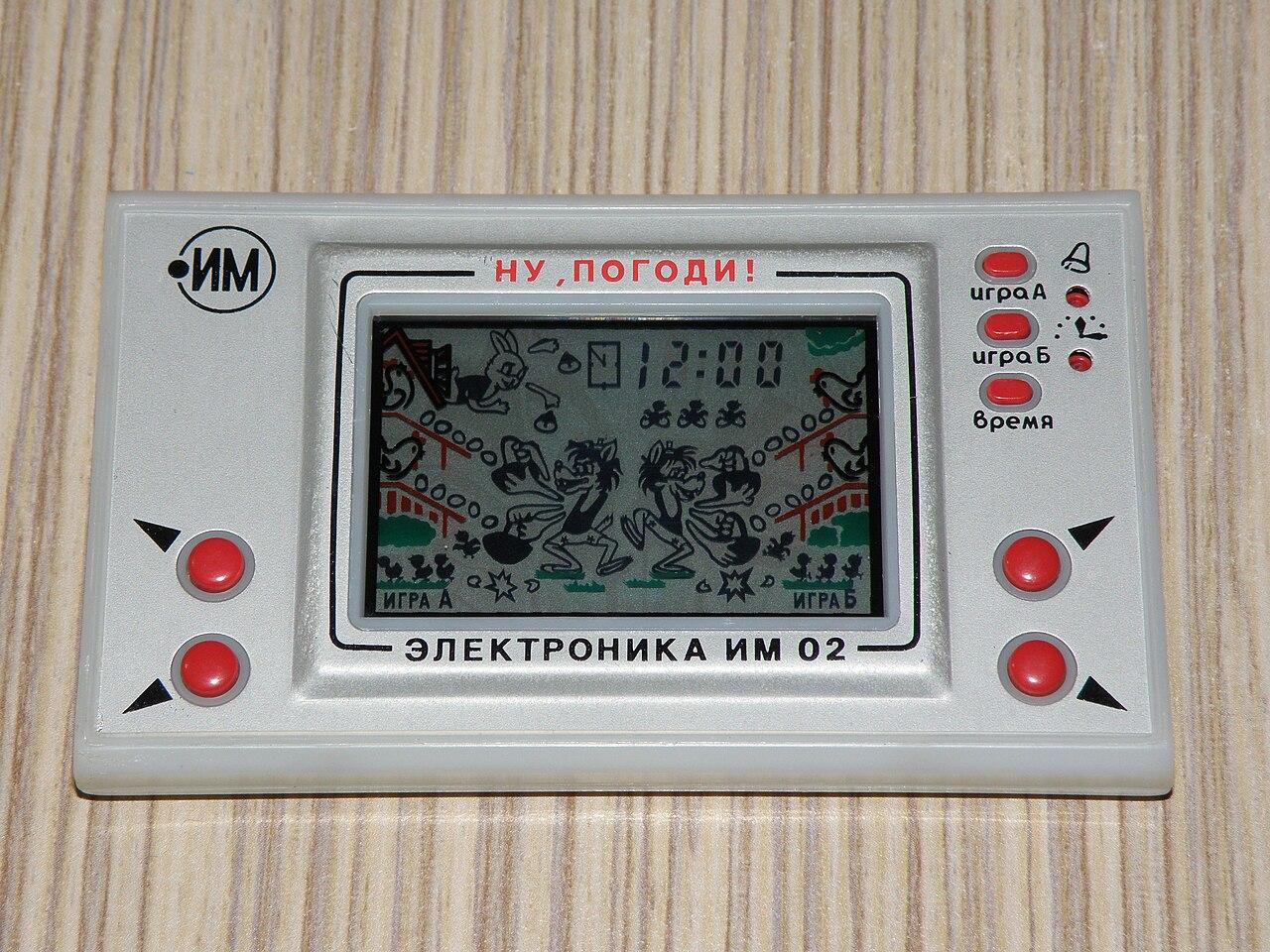
1. Nintendo introduces the world to the Game & Watch, a portable console that later acquires iconic status. The first model reaches the Japanese market on April 28, 1980, with the last game releasing in 1991. Approximately 60 games were published for this platform. In the USSR, a local version of the console gains traction under the “Electronics” brand.
2. In the United States, arcade machines gain immense popularity with Pac-Man, which subsequently becomes a timeless classic and inspires countless imitators. Around 100,000 machines are installed. Years later, Google will commemorate it with a themed doodle – https://g.co/kgs/RLz3kMC.
Another notable project in November 1980 is Battlezone, one of the pioneering 3D games with vector graphics.
3. The rivalry escalates into a more intense conflict between the now largely forgotten Mattel Electronics console, Intellivision, positioned as a main competitor to the Atari 2600 flagship. The marketing strategy, back then generally similar to today’s, promised superior graphics, sophisticated but later controversial controllers, and “advanced” games. This rivalry peaks in 1983, coinciding with the industry’s crash that will later dramatically change with the advent of the Nintendo Entertainment System and its competitors.
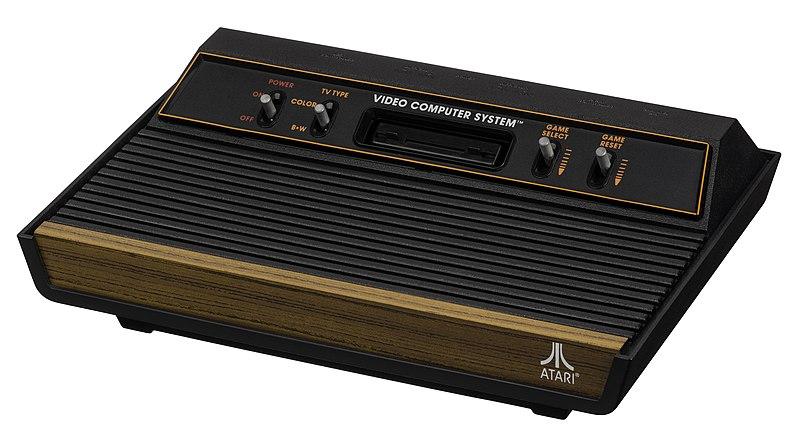
4. Seizing the moment, Atari releases an updated version of its console, numbered 2600, later labeled “VCS.” Without delving deeply into cosmetic and other changes, suffice it to say that the library of key games was expanded, including various accessories, and the design was simplified. This version eventually becomes the foundation for numerous modern remakes, with changes that help the objectively outdated console remain on the market until 1992, setting a noteworthy record.
5. Parker Brothers, renaming itself Hasbro in 1991 and known at the time for its board games, decides to venture into entertainment for the Atari 2600, releasing projects like Frogger and Star Wars: The Empire Strikes Back.
6. Between November and December of 1980 (sometimes dated December 1), Zork: The Great Underground Empire launches on the TRS-80 and Apple II. This project, which partly defined the genre known as “interactive fiction,” later appears on other platforms including the IBM PC.
Links.
An in-depth article from May 25, 2020, shedding light on the development of this project – https://medium.com/@r.ajdnik/zork-the-great-underground-empire-cda94623861c.
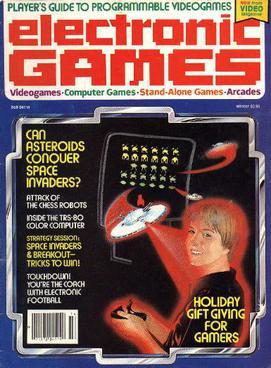
7. The gaming industry gradually stops being a niche realm for the dedicated. By November, preparations are underway for the launch of the magazine Electronic Games, whose first issue reaches the public on October 29, 1981, while reputable publications like The New York Times and Los Angeles Times discuss the cultural phenomenon sparked by Pac-Man. News broadcasts also cover this, though the stage of sensational reports and heated debates is more than 10 years away.
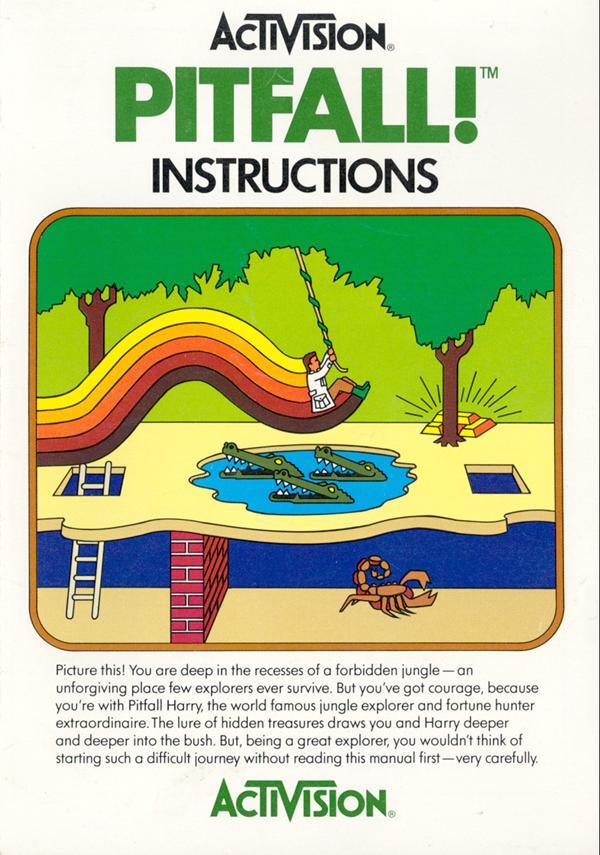
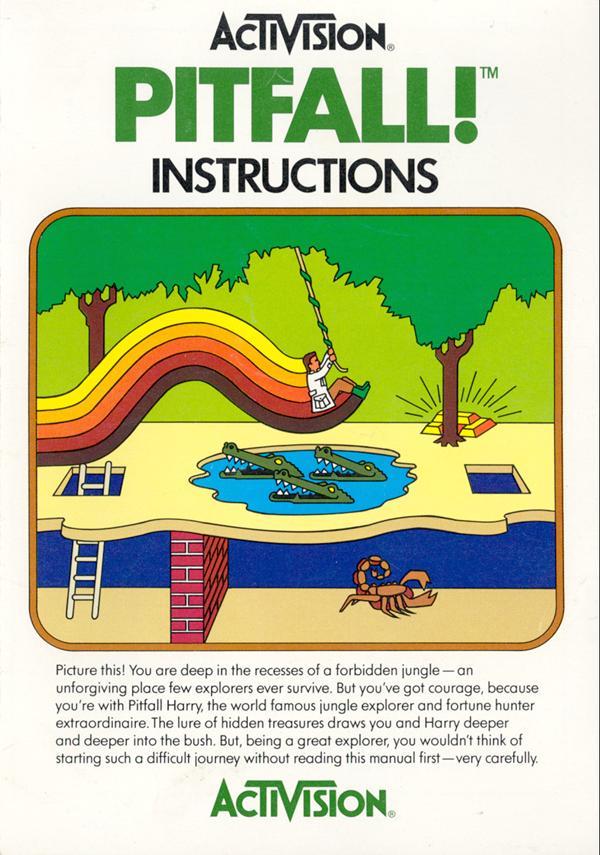
8. Established in 1979, Activision begins development of two new projects—Kaboom! and Pitfall!—set for release in 1981 and 1982.
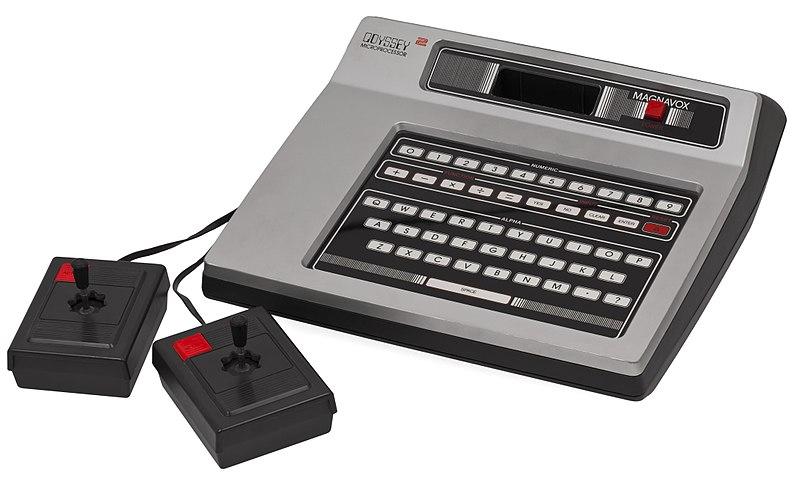
9. In Europe, the Philips console, initially named Philips Videopac G7000 and later rebranded as Magnavox Odyssey², attempts to compete with the Atari 2600. Following the trends of the time, emphasis is placed not only on individual arcade games but also on educational programs. By November, the console reaches Germany, France, and the UK, along with three games—Computer Golf, an early golf simulation, Flipper Game, a pinball game, and Electronic Soccer. Despite not achieving Atari’s scale, the new device carves out its own niche for a period.
10. Texas Instruments, today perhaps best known for its engineering calculators, releases several revisions of its personal computer from 1979 through 1981, one of which is the TI-99/4. Originally designed as one of the first 16-bit devices for work and education, it is the local adaptations of known arcade games like TI Invaders, Munch Man, and Parsec that attract a broader audience.
Links.
Personal recollections from October 5, 2002, about a computer revision acquired by the author in the fall of 1992 – http://sannata.org/museum/ti99_4a.shtml.
11. Founded in 1958, Midway Manufacturing, later rebranded as Midway Games Inc., acquires the rights to release Rally-X from Namco in November 1980. This racing arcade’s unique map-scrolling feature later becomes a standard in the genre as a whole. Gameplay involves navigating a maze to find flags, with opponents occasionally blocking the path, which can be slowed with smoke. Another feature is a mini-map that aids navigation within the level. While not as widespread as other arcades of its time, it was later ported to numerous platforms.
12. Another contender against the Atari 2600, the similarly named gaming system ColecoVision, also emerges. Work on its overall architecture presumably started in November 1980, but sales for the console only began in 1982. The focus was on power, with ported games closely resembling their arcade counterparts. Donkey Kong becomes one of the few Nintendo games—or possibly the only title in history—to launch as a starter project with a device not directly associated with the company.
13. One of the first widespread home computer models in Japan is the NEC PC-8001, released in 1979. By November 1980, the following trends emerge:
* Early local projects appear, mostly text-based adventures and simple arcade games.
* Clubs form, serving as a prototype for computer enthusiast gatherings where gaming development specifics are discussed.
* Fujitsu and Sharp actively work on releasing their platforms.
This combination of factors eventually leads to a range of iconic RPGs, notably The Black Onyx (1984), and strategic games like Bokosuka Wars (1983) and Nobunaga’s Ambition (1983).
14. The Sinclair ZX80 gains popularity in the UK as the first computer targeted for home use priced under 100 pounds. By November, early programmer communities form, and a mail-based cassette game market emerges, soon transitioning to retail, marking the starting point for companies like Rare and Codemasters.
15. Sega continues to strengthen its presence in the arcade machine market. Some of its most popular titles include Carnival, a virtual shooting gallery requiring players to hit moving targets, reminiscent of a common amusement park attraction, and Samurai, which can loosely be described as a precursor to fighting games.
16. Before releasing enduring hits like Donkey Kong, Nintendo, in collaboration with Shigeru Miyamoto, puts out Radar Scope. Essentially an alternative version of Space Invaders, it doesn’t achieve notable success but marks the first commercial project for what would become a master game designer.
17. As preparations for the upcoming holidays begin, by November 1980, Space Invaders becomes the best-selling game, with the Atari 2600 version selling over 1 million copies. The console itself becomes one of the most desirable gifts. Other popular projects include Adventure and Missile Command.
18. The massive shift to cartridges gradually replaces the concept of built-in device games, though this format, in one form or another, persists for decades.
19. In November-December 1980, Atari organizes the “Space Invaders Championship,” the first large-scale tournament held across major US cities, including New York, Los Angeles, Chicago, and Houston. More than 10,000 people participated, and the winner, Bill Heins, later contributed to various RPG creations at Interplay.
20. Williams Electronics releases the arcade game Defender, a horizontal scroll-shooter that stirs the industry. Notable aspects of the game include:
* The first game to support side-scrolling.
* Gameplay involves more than shooting enemies—hostages also needed rescuing, as they could otherwise transform into monsters.
* The difficulty level, often not clearly defined at the time, was elevated to an unprecedented height.
* Colorful (for its time) graphics and animation distinguished the project in the arcade halls.
* By the mid-1980s, the title earned more than 1 billion dollars.
* Defender’s success influenced the creation of the R-Type and Gradius series.
21. In the US, politicians start seriously discussing the impact of video games on children. Though no strict laws are passed, and rating systems and the ESRB are still distant, debates do create background noise:
* Some parents express the view that children spend too much time in arcades.
* In Massena, New York, there is an attempt to completely ban arcade machines due to their distraction from education, paralleled in Chicago by efforts to legislate a ban on minors in arcades during evening hours.
* Talks on the dangers of video games, such as addiction and negative behavioral impact, draw comparisons to the comic book controversies of the 1950s.
22. Phoenix, one of the first shoot ’em ups featuring level-end bosses, emerges. The game consists of five stages, each with unique enemy types. Instead of merely fleeing, players can wield an energy shield. Phoenix’s mechanics later inspire titles like Galaga (1981), Exerion (1983), and Xevious (1983), while other features contribute to the term “bullet hell.”
23. Exidy releases Spectar, an early isometric-view arcade game. Players traverse a maze in a car, navigating around enemies and obstacles. Levels are procedurally generated rather than static, influencing future titles such as Crystal Catles (1983) and Marble Madness (1984).
24. Gremlin Industries, a Sega subsidiary, and Nintendo collaborate to create the shooter Space Firebird. Enemies can change shape and attack following various patterns. Players are armed with a limited supply of bombs that destroy nearby foes. This project is among the first collaborations between American and Japanese developers.
25. In early November 1980, several new chips debut and find extensive use in the technology of the era.
* Zilog Z80: An 8-bit processor applied in Atari 2600, arcade machines, and Game Boy, among others.
* TMS 9918: A graphic chip from Texas Instruments, standard in consoles and home computers, featured in the first MSX revision, TI-99/4A, and Sega SG-1000.
* Custom chips become widely used, designed specifically for certain games to enhance sound effects. This concept is later applied in NES projects.
26. Atari patents a new type of controller—Trackball. Designed for the Atari 2600, it sees use in games such as Missile Command, Centipede, and Atari Football.
27. During Pac-Man’s development, it was called Puck Man, but upon its U.S. release, developers changed the name to avoid potential vandalism altering the first letter.
28. Stern Electronics releases Berzerk. While seemingly just another arcade game where players fight robots in a maze, it holds some intriguing features:
* Robots can adapt to player behavior, forming groups and pursuing players differently from most of their “simpler” counterparts back then.
* Enemy voices, later classic in the early ’90s shooter boom, appear here with lines like:
“Intruder alert!”
“The humanoid must not escape!”
“Get the humanoid!”
* Levels are randomly generated with increasing complexity.
29. Universal releases Space Panic, one of the earliest platformers, with gameplay mechanics akin to the well-known Lode Runner (1983).
30. IBM unveils a prototype personal computer. Henceforth, starting from 1981, the term “IBM PC” becomes generic.
